
Deck and Porch Painting Tips for Long-Lasting Results
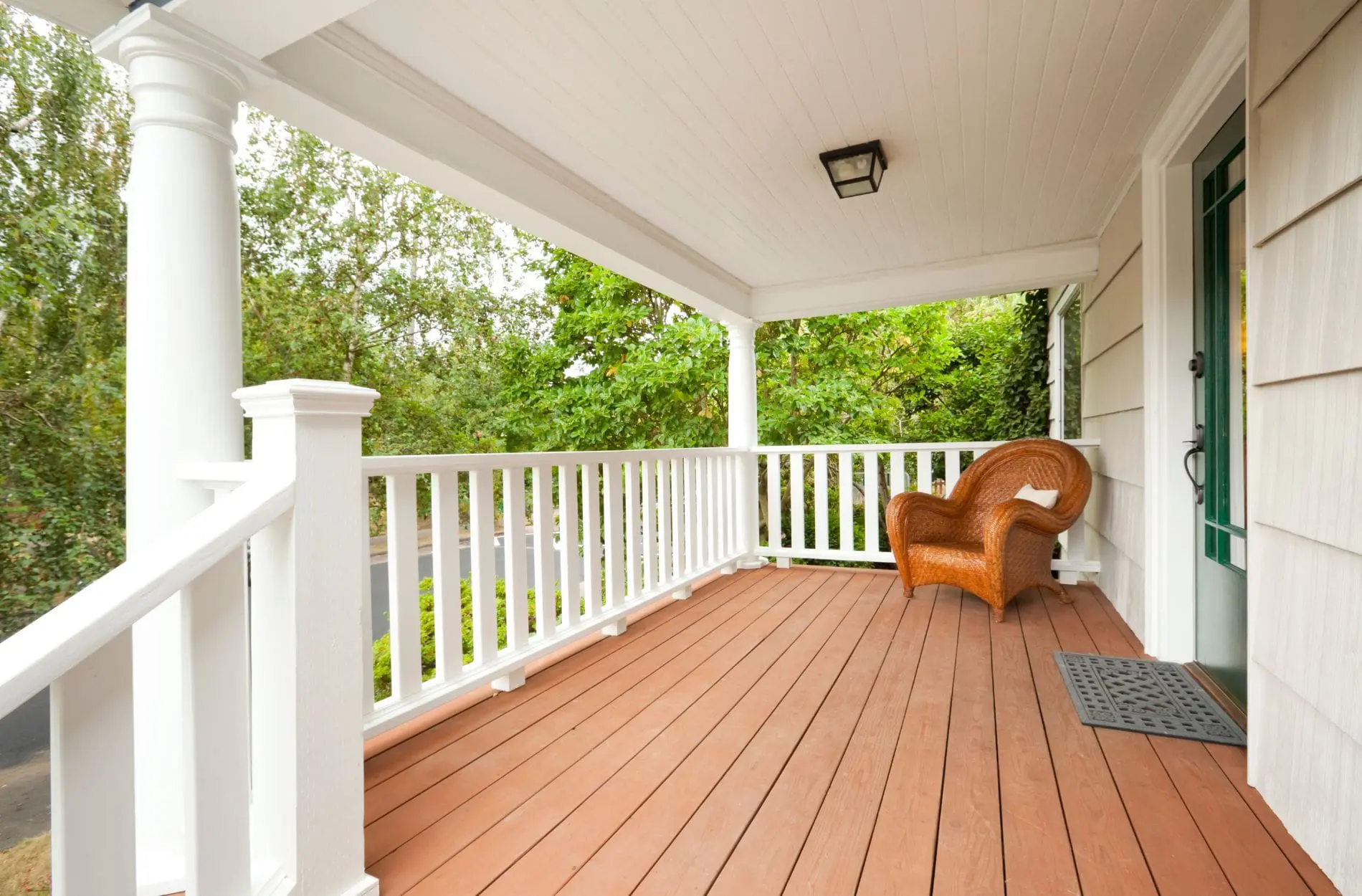
A deck or porch that needs repainting looks straightforward on the surface. Clean it, sand it, apply a coat or two, and move on. In practice, horizontal wood surfaces fail faster than almost any other exterior surface on a home, and most of those failures trace back to the same root causes: underestimating how much punishment the surface takes and cutting corners on prep or product selection. A deck paint job done right can last 6 to 8 years. One done with inadequate prep or the wrong product starts peeling within 2 to 3 seasons. This post covers why decks and porches are uniquely challenging, what proper preparation involves, how to choose between paint and stain, what products perform best, when to schedule the work in the Schaumburg area, what to expect on cost, and how to maintain the result once it’s done.
Why Decks and Porches Are Harder to Paint Than Other Exterior Surfaces
Horizontal surfaces take a fundamentally different level of abuse than vertical siding or trim. Water runs off a wall. On a deck, it sits. UV hits a horizontal surface at a direct angle all day rather than glancing off at an angle the way it does on siding. Foot traffic adds physical abrasion that no vertical surface experiences. And in the Chicago area, the freeze-thaw cycle puts wood through significant seasonal movement that paint has to flex with or crack.
A few specific challenges that make deck painting more demanding:
- Temperature cycling: a deck board sitting in full sun in July and freezing in January expands and contracts considerably through the season. Paint that can’t flex with that movement cracks at the surface and allows moisture underneath.
- Mixed grain orientation: flat-sawn boards absorb and release moisture differently than edge-grain boards, which creates uneven movement across the surface and makes uniform adhesion harder to achieve.
- Covered porches: a roof overhead reduces UV exposure but traps humidity, which promotes mildew growth and softens the paint film over time. Porches often develop mildew problems faster than open decks even though they look more protected.
Underestimating these conditions is the most common reason deck paint jobs fail early. The surface looks like a simple repaint and gets treated like one.
Surface Preparation Makes or Breaks the Result
Preparation on a deck is more intensive than on a vertical surface because the surface accumulates more contamination and typically has more existing damage. Skipping or rushing any part of it directly shortens the life of whatever goes on top.
The preparation sequence for a deck repaint:
- Power washing: removes dirt, mildew, and the gray weathered layer that forms on unprotected or poorly maintained wood. The same pressure settings and mildew treatment steps used before exterior painting apply to deck surfaces as well.
- Drying: the deck needs at least 48 hours to dry fully after washing under good conditions in the Schaumburg area. Painting over wood that still holds moisture causes bubbling and adhesion failure.
- Sanding: opens the wood grain, smooths raised fibers and splinters left by weathering, and creates a surface the paint can bond to. This step is skipped more often than any other and accounts for a significant share of early paint failures on decks.
- Repairs: rotted or damaged boards need to be replaced before painting begins. Paint covers structural problems temporarily. It doesn’t fix them.
- Fastener prep: nail and screw heads that have popped or rusted need to be countersunk and spot-primed. Rust bleeds through paint quickly and creates permanent staining that shows through even multiple finish coats.
The prep scope on a deck often expands after power washing reveals damage that wasn’t visible under dirt and weathered paint. That’s expected — and it’s better to know before the paint goes on than after.
Paint or Stain: Which Is Right for Your Deck?
Paint and stain are both viable options for decks and porches but they produce different results and carry different maintenance profiles over time. The choice matters because once a surface has been painted, it has to be repainted. Staining over paint doesn’t work.
How they compare:
- Paint: creates an opaque film on top of the wood that hides the grain and offers the widest color range. It provides strong protection when applied correctly but fails in sheets when it does peel, which makes recoating more labor-intensive.
- Solid stain: similar coverage to paint in that it obscures the grain, but it penetrates slightly into the wood rather than sitting entirely on top. When solid stain fails it tends to peel in smaller flakes than paint, which makes recoating easier over time.
- Semi-transparent stain: allows the wood grain to show through while adding color and UV protection. It needs more frequent reapplication than paint or solid stain but is significantly easier to maintain because it doesn’t peel — it simply fades and can be recoated without stripping.
The key factors in deciding: whether the surface has been previously painted (previously painted surfaces must be repainted or fully stripped — they can’t be stained over), the homeowner’s preference for visible grain versus uniform color, and how much prep they want to deal with at the next repaint cycle.
How to Choose the Right Product for the Job
Product selection is one of the most consequential decisions in a deck painting project and one of the most commonly underestimated. Not all deck paints and stains perform equally, and the wrong product category fails regardless of how well everything else was done.
What to look for:
- Deck-specific formulas: products specifically formulated for horizontal deck surfaces contain UV resistance, mildew resistance, and flexibility additives that standard exterior paints don’t include. House paint used on a deck is not the right product for the application.
- 100% acrylic formulas: the current standard for deck coatings. They flex better with wood movement than oil-based products and hold up to cleaning and foot traffic without cracking.
- For paint: a deck and floor enamel rated for foot traffic is the right product category. These are harder and more abrasion-resistant than standard exterior paints.
- For stain: penetrating oil-based stains offer excellent moisture protection and are easy to recoat over time. Water-based solid stains are lower VOC, dry faster, and have improved significantly in durability over the past decade.
- Primer: bare wood and repaired areas always require primer before the finish coat. On a deck, a penetrating primer that seals the wood grain is more effective than a standard surface primer.
- Resurfacing products: avoid coatings that promise to fill cracks or resurface damaged wood. These rarely perform as advertised and create adhesion problems for future recoats.
Timing and Weather Conditions in the Schaumburg Area
Deck painting in the Chicago suburbs is seasonal. The application window is limited by temperature, humidity, and how many consecutive dry days are available.
Ideal application conditions:
- Temperatures between 50°F and 85°F
- Low humidity
- No rain forecast for at least 24 to 48 hours after the final coat
Spring is the most common time to repaint decks because the wood has dried out from winter moisture and temperatures are moderate. The problem with spring in Schaumburg is unpredictable rain that can interrupt a project mid-coat or prevent adequate drying time between coats.
The broader factors affecting exterior paint timing, including temperature minimums, humidity thresholds, and drying windows, are covered in detail as part of how spring weather affects exterior house painting in Schaumburg.
Early fall is often the better window. Temperatures are stable, humidity drops, and a reliable stretch of dry weather typically arrives before temperatures fall below the application minimum. The wood also tends to be drier in fall than in spring after a wet season.
One timing mistake worth avoiding: painting in direct afternoon sun on a hot day. The surface temperature of a sun-exposed deck can run 20 to 30 degrees higher than the air temperature, which causes paint to dry too fast, traps solvents in the film, and reduces adhesion across the entire surface. Morning application on a shaded or east-facing deck allows the paint to cure during the cooler part of the day before afternoon temperatures peak.
What Deck and Porch Painting Typically Costs
Deck and porch painting costs depend on surface size, wood condition, product choice, and how much prep work is required before the first coat goes on.
General cost expectations in the Schaumburg area:
- A standard deck repaint typically ranges from $800 to $2,500 depending on square footage and prep scope
- Decks requiring significant board replacements, extensive stripping of failing paint, or structural repairs run toward the higher end of that range or beyond
- Porch painting adds complexity because of railings, balusters, steps, and detailed woodwork — labor time increases considerably compared to a simple flat deck surface
- Cost per square foot on a deck is typically higher than on vertical siding because of the prep intensity and the number of coats required for horizontal surfaces
The most common reason deck painting costs more than the initial estimate: the prep scope expands after power washing reveals damage that wasn’t visible during the walkthrough. Loose boards, rot beneath old paint, and severe paint failure all add to the project cost. A reputable contractor will communicate these findings before proceeding rather than absorbing the cost silently or cutting the prep short.
How to Keep a Painted Deck Looking Good Longer
Maintenance between full repaints extends the life of the finish and keeps the cost of the next project lower by reducing how much prep work is needed.
Practical maintenance steps:
- Clean the deck once a year with a mild deck cleaner and a soft brush. Removing dirt, mildew, and organic debris prevents the surface buildup that breaks down the paint film from below.
- Clear standing water and debris after storms rather than allowing them to sit. Prolonged moisture exposure on a horizontal surface is the primary driver of paint failure.
- Inspect the surface annually for areas where the paint has thinned, cracked, or begun to lift. Spot repairs made early prevent larger sections from failing and keep the overall paint system intact.
- Move furniture and planters periodically to allow the wood underneath to dry. Moisture trapped under stationary objects softens the paint film and creates conditions for mildew growth.
- Plan for a full repaint every 4 to 6 years on a well-maintained painted deck under normal Schaumburg conditions. Decks in full sun or with heavy use will need attention sooner.
Ready to Repaint Your Deck or Porch in Schaumburg?
Deck and porch painting fails faster than almost any other exterior surface when the preparation, products, or timing are wrong. Getting those three elements right from the start is what separates a result that holds up for years from one that needs attention again within a few seasons.
Damian’s Painting works with homeowners across Schaumburg and the surrounding area on deck and porch painting projects. If you are ready to move forward or want to understand what the project would involve for your specific surface, contact us today for a free estimate.